ChatGPT, Claude, Perplexity. What's actually happening?
Three different apps. Same magic. By the end of this article, you'll explain it to a kid, or to that uncle who keeps asking how Karthik next door cleared TNPSC so fast.
Why this matters
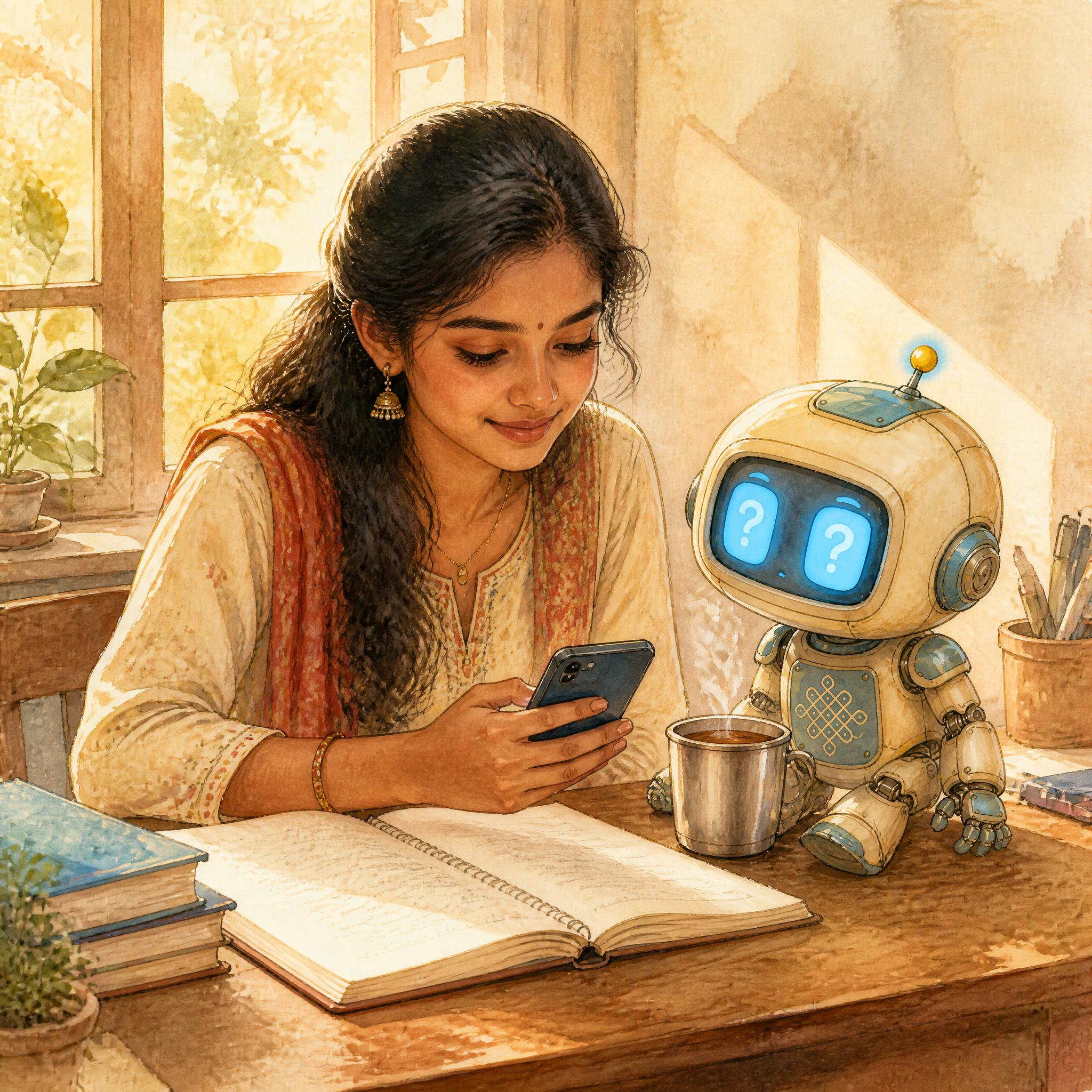
Across Tamil Nadu right now, four different people are typing into the same kind of app on their phones.
A 22-year-old in Coimbatore is preparing for a remote software interview, asking ChatGPT to mock-interview her in Python, even though she dropped out after second year of engineering college. She'll get the offer next month.
A mother in Madurai tonight is helping her daughter solve a Class 11 physics problem about projectile motion. ChatGPT walked her through the concept first so she could explain it to her daughter in their kitchen.
A small business owner in T.Nagar is writing a legal-tone reply to a vendor dispute. His English is functional, not fluent. ChatGPT drafts the letter in a formal corporate register, saving him the cost of a legal consultant.
A college student in Chennai is preparing for the TNPSC Group 2 exam. She types a prompt for a summary of Indian Polity. Three seconds later, she has structured notes that would usually require hours of tuition.
How is this possible?
Whether they open ChatGPT, Claude, or Perplexity, they are seeing the same result. Different companies, different names, same magic.
But what is happening inside? Is it thinking? Does it understand the law or the physics? In the next ten minutes, we will look under the hood. By the end, you'll be able to explain it to a ten-year-old.
AI is like a "Sivagami Computer Josiyam" that memorized the entire internet, stitching together answers that sound right, one word at a time.
Meet the Sivagami Computer
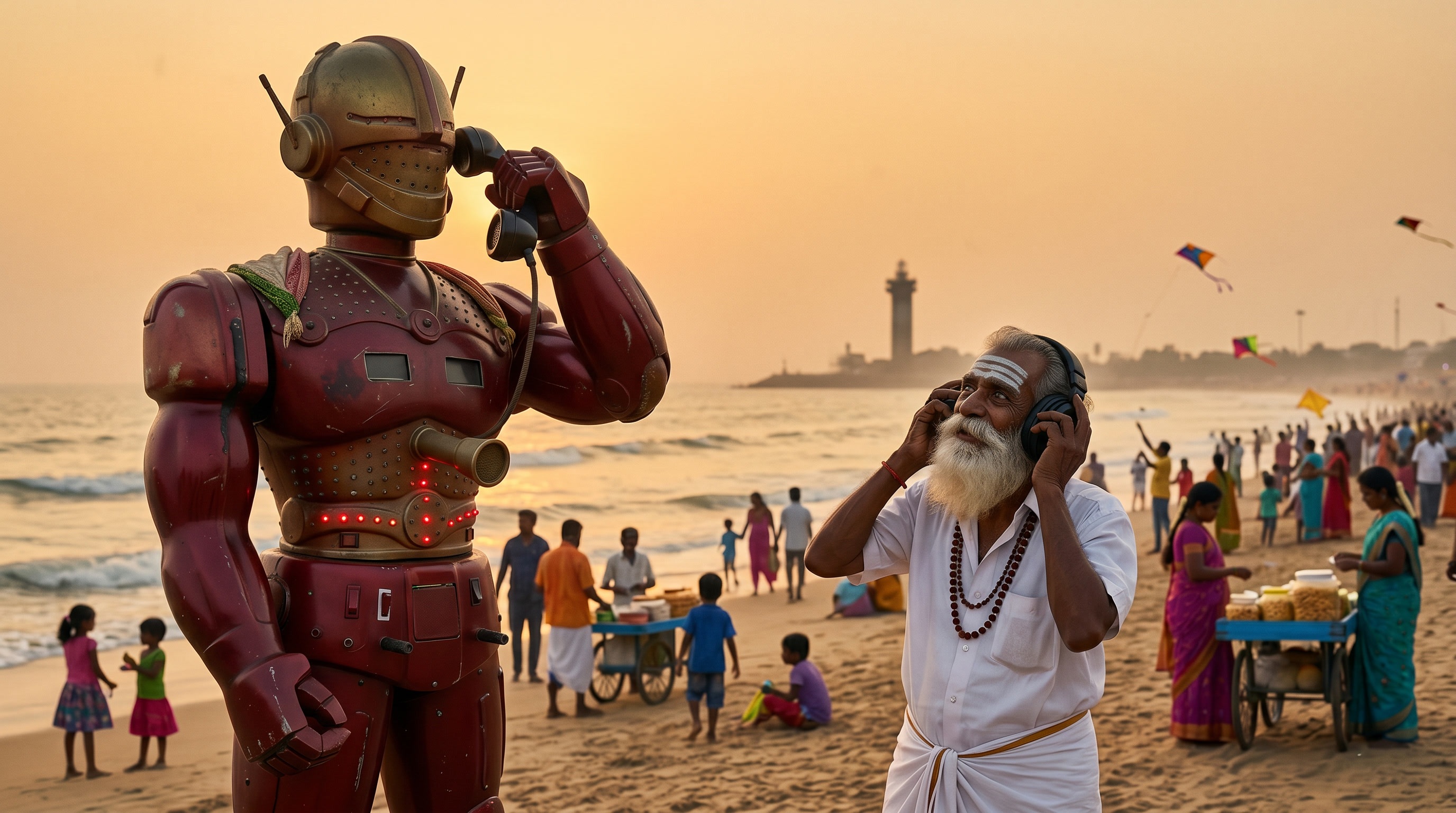
If you have ever been to a trade fair or a temple festival, you've seen it: Sivagami Computer Josiyam.
It's a red robot mannequin with glowing eyes, sitting behind a small keyboard. You give it your name or date of birth, it whirrs and hums, and then a small printer spits out a slip of paper with your "future" on it.
Does that robot know your future? No. It doesn't know you at all.
Inside that box is a memory chip filled with thousands of generic sentences about life, wealth, and health. When you provide an input, it simply selects the sentences that fit the pattern of your category.
AI works the same way.
ChatGPT is like that Sivagami Computer, but with three massive upgrades:
- The Scale: It didn't just memorize a few cards; it memorized the entire public internet.
- The Output: It doesn't pick a pre-written slip. It generates a new answer, one word at a time.
- The Speed: It processes billions of patterns in seconds.
Same trick. Internet scale.
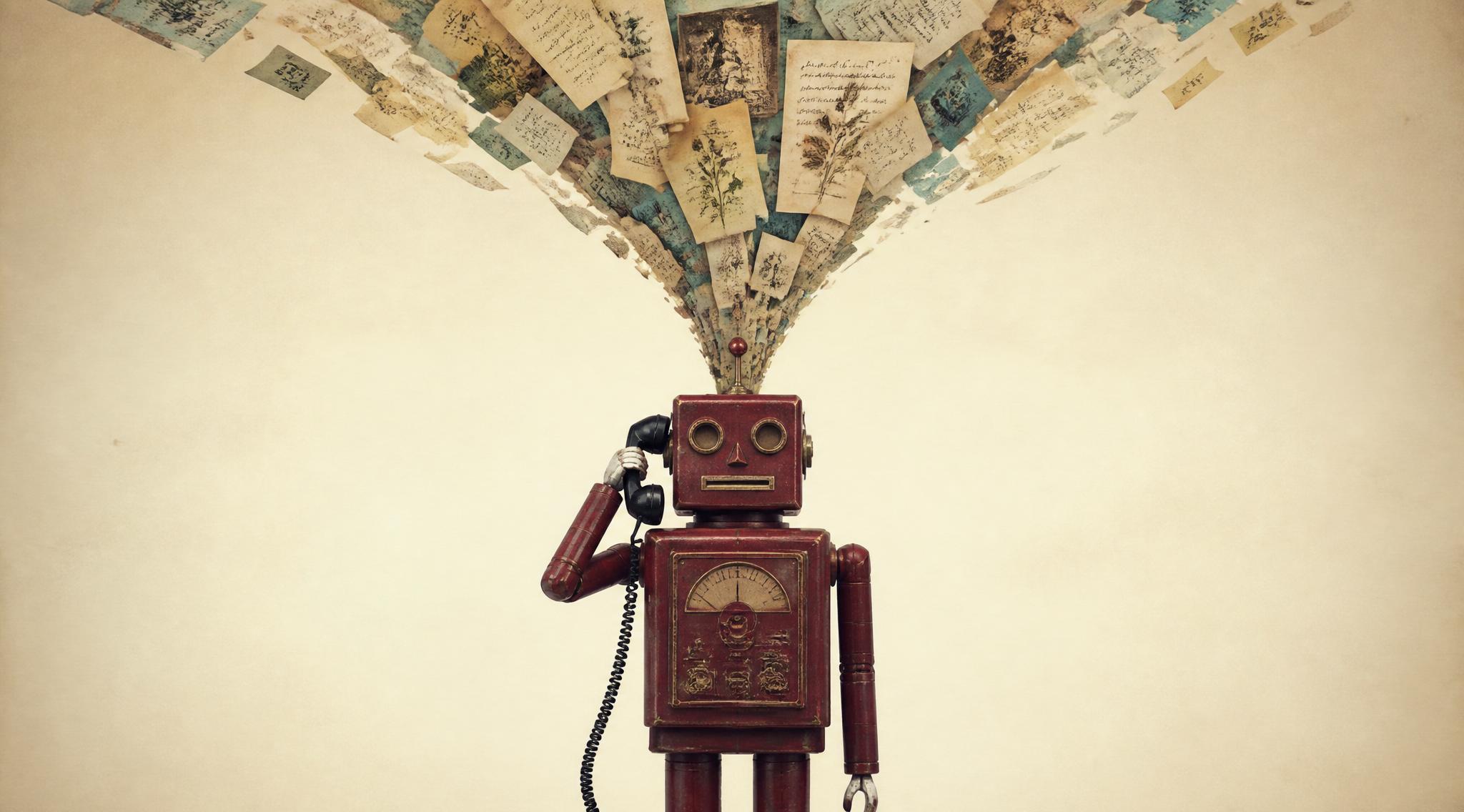
Now picture the Sivagami Computer again, but at internet scale.
This bigger Sivagami Computer was fed every Wikipedia article, every Tamil poem, every TNPSC question paper, and every coding tutorial ever written. Not a coin slot, not one card. Trillions of words, in every language, on every topic.
It memorized the patterns. After the words "Indian Constitution is..." the most likely next word is "the." After "the," the most likely word is "supreme." After "supreme," the word "law." It learned this by reading the same sentence written a hundred thousand different ways.
When you ask for a summary, the Sivagami Computer doesn't know what a Constitution is. It looks at its massive internal pile of text and asks: "Based on everything I have seen, what is the most likely word a human would write next?"
It prints that word. Then it predicts the next one. Thousands of times per second. Because it has seen so much data, the "guess" reads back like a real answer. Same trick as the festival robot. Just a much, much bigger pile of memorized text.
What AI is NOT
Once you see the trick, you can bust four big myths about AI.
One. AI is not magic.
It is a massive math equation. Your calculator knows 2+2=4 through math. AI knows that "Deepavali" is usually followed by "Wishes" through probability.
Two. AI is not thinking.
When it writes a summary, it isn't picturing the Parliament. It is just matching patterns. Thinking requires a brain; AI only requires a fast processor.
Three. AI is not conscious.
It doesn't want to help you. It has no feelings. It is a program that runs when you call it and stops when you don't.
Four. AI is not always right.
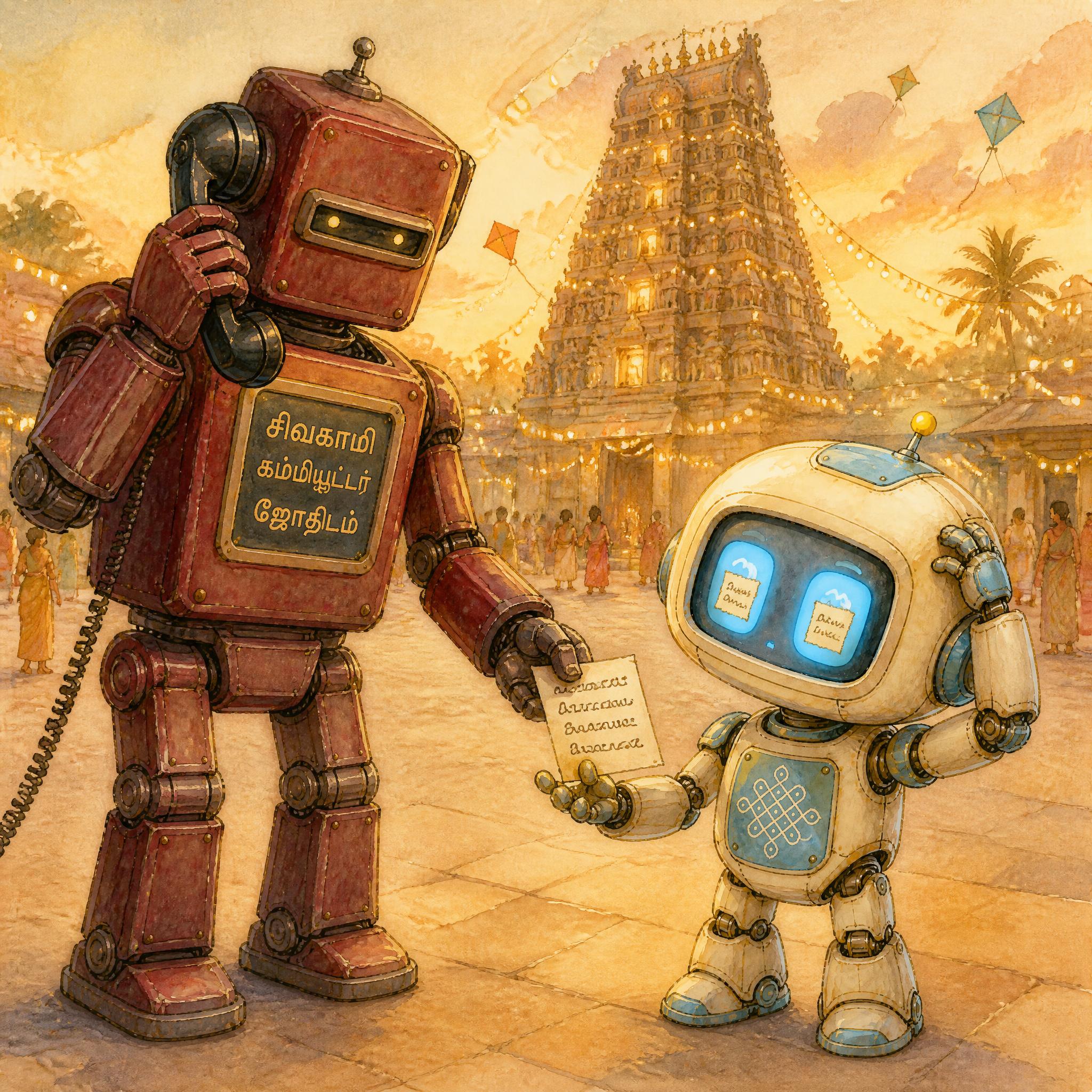
Just like the Sivagami Computer might give you a generic prediction that doesn't apply to your life, AI can make things up. This is called hallucination. It predicts the next word based on probability, even if that word is factually wrong.
The three families of AI
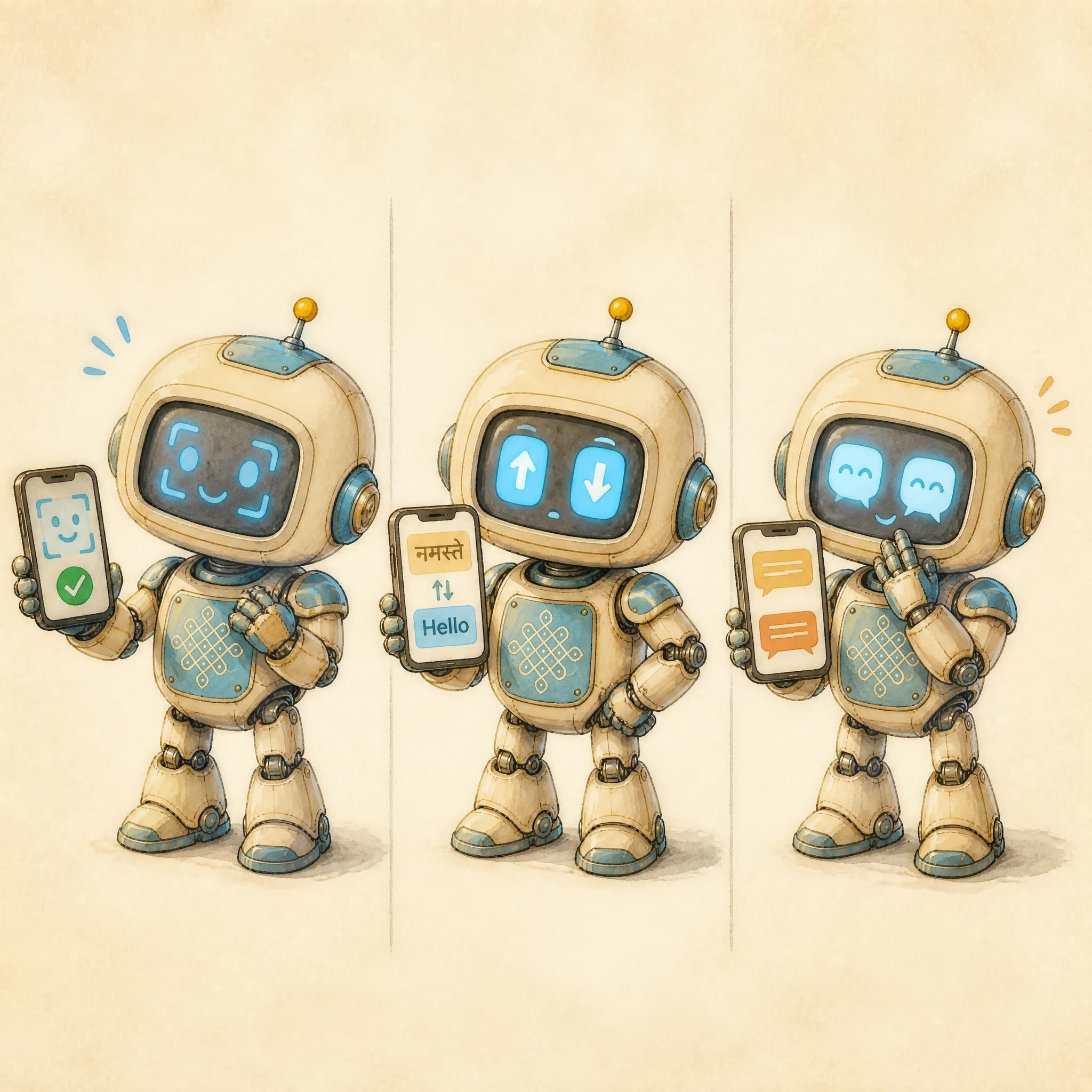
You've seen ChatGPT, the kind that talks.
But the same Sivagami Computer trick (memorize patterns, predict result) shows up in three different forms in your life right now.
The first family: AI that SEES
When you unlock your phone with your face, that's AI.
This Sivagami Computer was shown millions of human faces during training. It learned the specific pattern of your eyes, nose, and the geometry of your face. Now when it sees you, it predicts: "99% probability this is the owner. Yes." Phone opens.
It doesn't know you. It matches the pattern. Google Photos auto-tagging your relatives in old pictures, same family.
The second family: AI that TRANSLATES
Google Translate is AI. It memorized millions of English sentences alongside their Tamil translations.
When you type something in English, it predicts the Tamil version that most likely matches. Sometimes it's perfect. Sometimes it's funny-wrong, because the exact sentence you typed wasn't in its memory, so the machine stitches together pieces from similar sentences it does have.
The third family: AI that TALKS
This is ChatGPT. This is Claude. This is Perplexity. This is the family taking the world by storm right now.
It didn't just memorize faces or simple translation pairs. It memorized almost all the text humans have ever written. When you ask it something, it predicts what text most likely comes next, one word at a time.
Every word it writes is a tiny prediction. The predictions are so good, you can't tell them apart from a human. But it's still a Sivagami Computer. Just a much, much bigger one.
The one mental model to remember
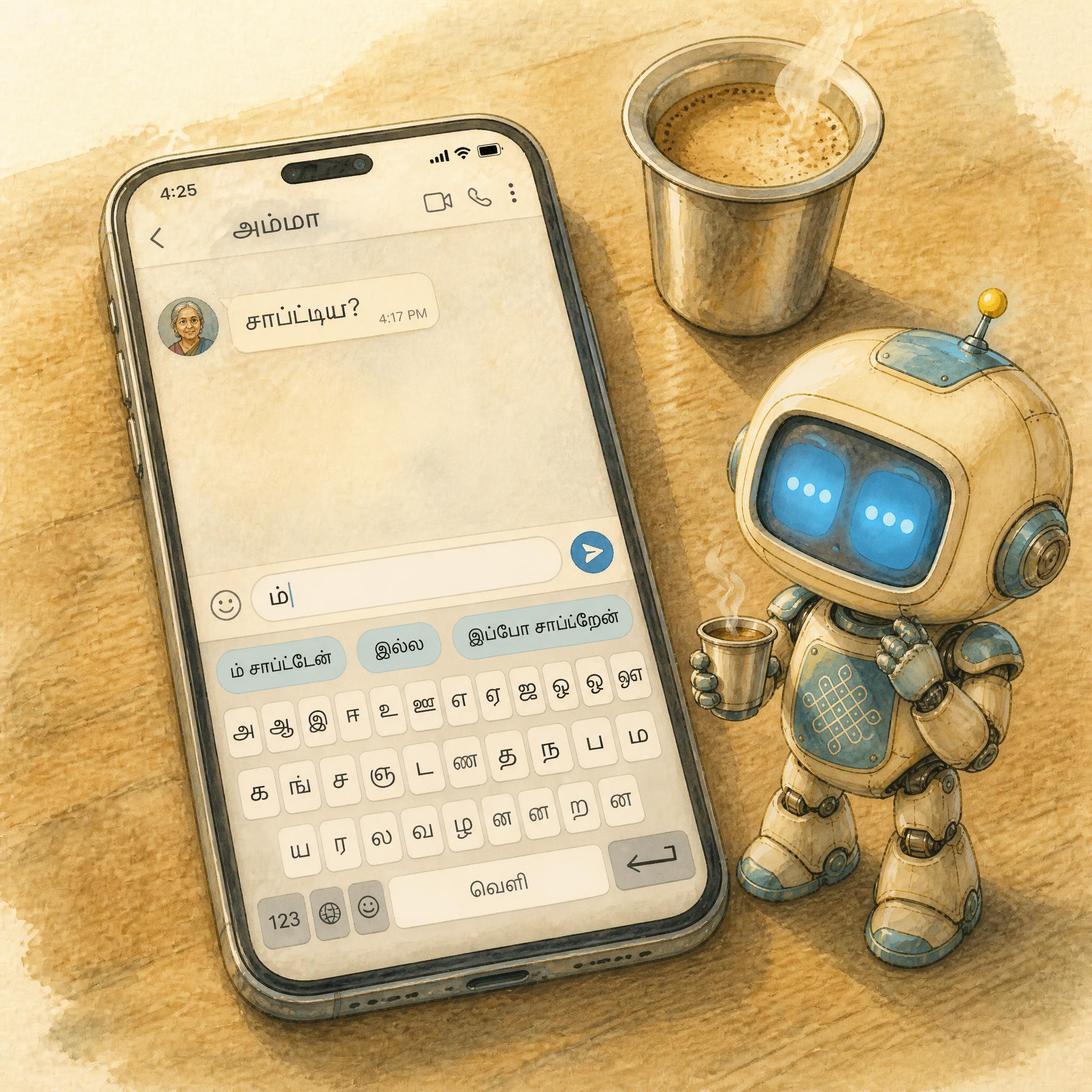
Think about when you type a message on WhatsApp. Your phone suggests the next word. That is Autocomplete.
ChatGPT is autocomplete with superpowers.
Your phone only knows your messages. ChatGPT knows everything ever written. Your phone predicts one word; ChatGPT predicts entire essays. But the logic is identical. It is a machine asking: "What word comes next?"